
Preparation (Mise en Place)
Select Quality Salmon
Choose wild-caught salmon when possible for superior flavor and omega-3 content. Look for firm flesh with a bright pink or orange color and a fresh, ocean-like smell.
Room Temperature Fish
Remove salmon from refrigerator 15-20 minutes before cooking. This ensures even cooking throughout and prevents a cold center.
Prep the Compound Butter
Mix softened butter with lemon zest, garlic, and herbs ahead of time. Roll into a log using plastic wrap and refrigerate for easy slicing.
Method
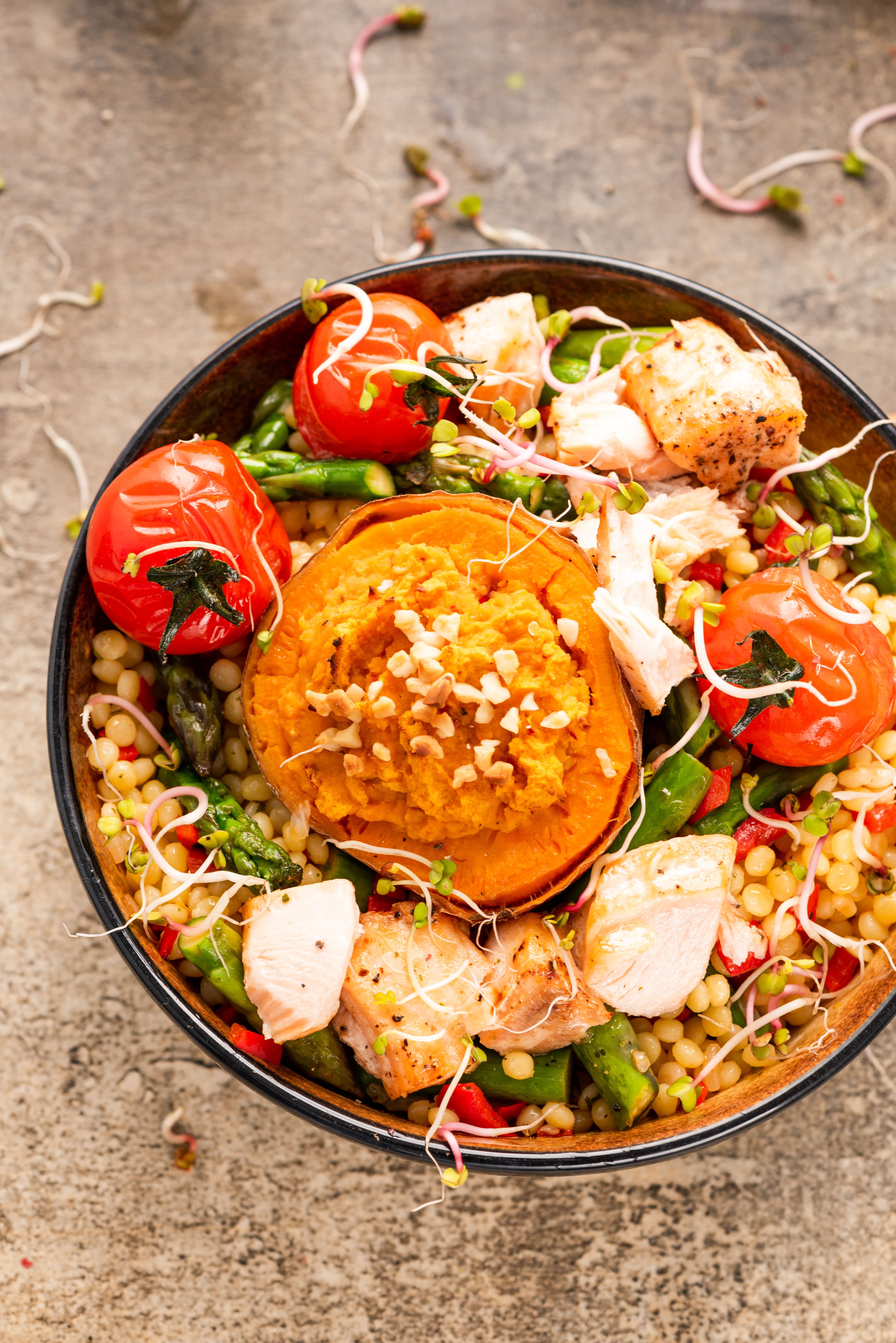
Pat the salmon fillets dry with paper towels and season both sides with salt, pepper, and dried dill.
Heat olive oil in a large skillet over medium-high heat. Add the salmon fillets skin-side up (if using skin-on) and cook for 3-4 minutes until golden.
Flip the salmon and add the asparagus to the skillet around the fish. Cook for another 3-4 minutes.
Reduce heat to medium-low. Add the butter, minced garlic, and lemon zest to the skillet. As the butter melts, spoon it over the salmon and asparagus.
If using white wine, pour it in now and let it bubble for about 30 seconds to deglaze the pan.
Squeeze fresh lemon juice over everything (start with half the lemon, add more to taste). Continue basting the salmon with the lemon butter sauce.
Cook for another 2-3 minutes, or until the salmon is cooked through but still moist (internal temperature of 145°F/63°C). The asparagus should be tender-crisp.
Remove from heat and stir in the fresh parsley.
Transfer the salmon and asparagus to serving plates. Drizzle any remaining lemon butter sauce over the top.
Serve immediately with additional lemon wedges on the side.
Chef's tips
Crispy Skin Technique
Start skin-side down in a hot pan and do not move the fish for the first 3 minutes. This allows the skin to release naturally and become crispy.
Doneness Test
Salmon is perfectly done when it flakes easily with a fork but still has a slightly translucent center. It will continue cooking after removal from heat.
Butter Basting
Tilt the pan and use a spoon to continuously baste the salmon with the melted butter. This creates incredible flavor and a glossy finish.
Substitutions
Fish Alternatives
Arctic char, trout, or halibut work beautifully with this preparation. Adjust cooking times based on thickness - about 4 minutes per half inch.
Dairy-Free Butter
Use ghee or avocado oil mixed with lemon juice for a dairy-free version. Coconut oil works but adds a subtle tropical flavor.
Herb Variations
Replace dill with tarragon, chervil, or a combination of parsley and chives. Fresh herbs provide brighter flavor than dried.
History
Nordic Origins
Salmon has been a staple in Nordic countries for thousands of years. Vikings preserved salmon through smoking and salting for long voyages.
French Technique
The butter sauce technique comes from French cuisine, where meuniere-style cooking with brown butter and lemon became a classic preparation.
Modern Health Food
Salmon became known as a superfood in the 1990s when researchers discovered its high omega-3 content. Its keto-friendly profile makes it a cornerstone of low-carb eating.


Nutrition per serving
- 4g
- Carbs
- 35g
- Protein
- 30g
- Fat
- 420
- Calories
Per serving. Values are estimates from standard ingredient data.
